Are Electric Toothbrushes Better Than Manual Toothbrushes?
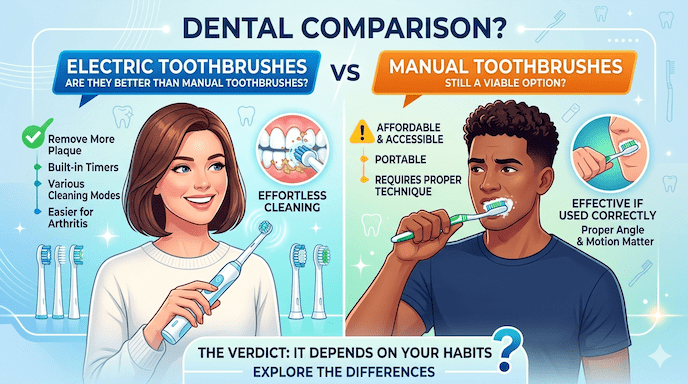
Are electric toothbrushes better than the regular ones you grew up using? Many people ask this question when they want cleaner teeth, healthier gums, or a simpler way to brush well every day. The short answer is yes for most people—electric toothbrushes often do a better job with less effort. They help remove more plaque, protect gums, and make sure you brush long enough.
This guide explains everything in simple words. You will learn why many dentists recommend them, who benefits most, and how to choose the right one. Whether you are a busy adult, a parent picking for kids, or someone with braces or sensitive gums, you will find clear answers here.
What Makes Electric Toothbrushes Different from Manual Ones?
A manual toothbrush is the basic brush you move with your hand. An electric toothbrush has a motor that makes the bristles move fast—either by rotating and oscillating or by vibrating at high speed (sonic).
You still guide the brush around your mouth, but the electric action does most of the cleaning work. This helps even if your brushing technique is not perfect. Many models add helpful features like a built-in timer and a pressure sensor that lights up or stops if you press too hard.
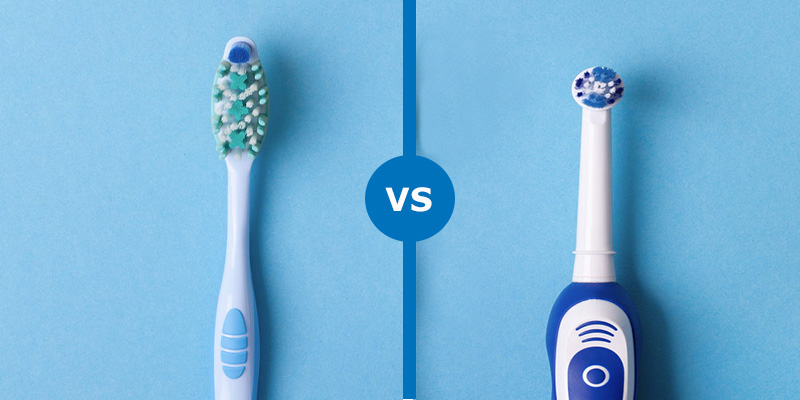
Electric toothbrush vs manual toothbrush comparisons show clear differences in daily use. Manual brushes rely fully on your skill and strength. Electric ones make brushing easier for everyone.
Why Are Electric Toothbrushes Better?
Are electric toothbrushes better mainly because they clean more thoroughly with less work? Here are the main reasons:
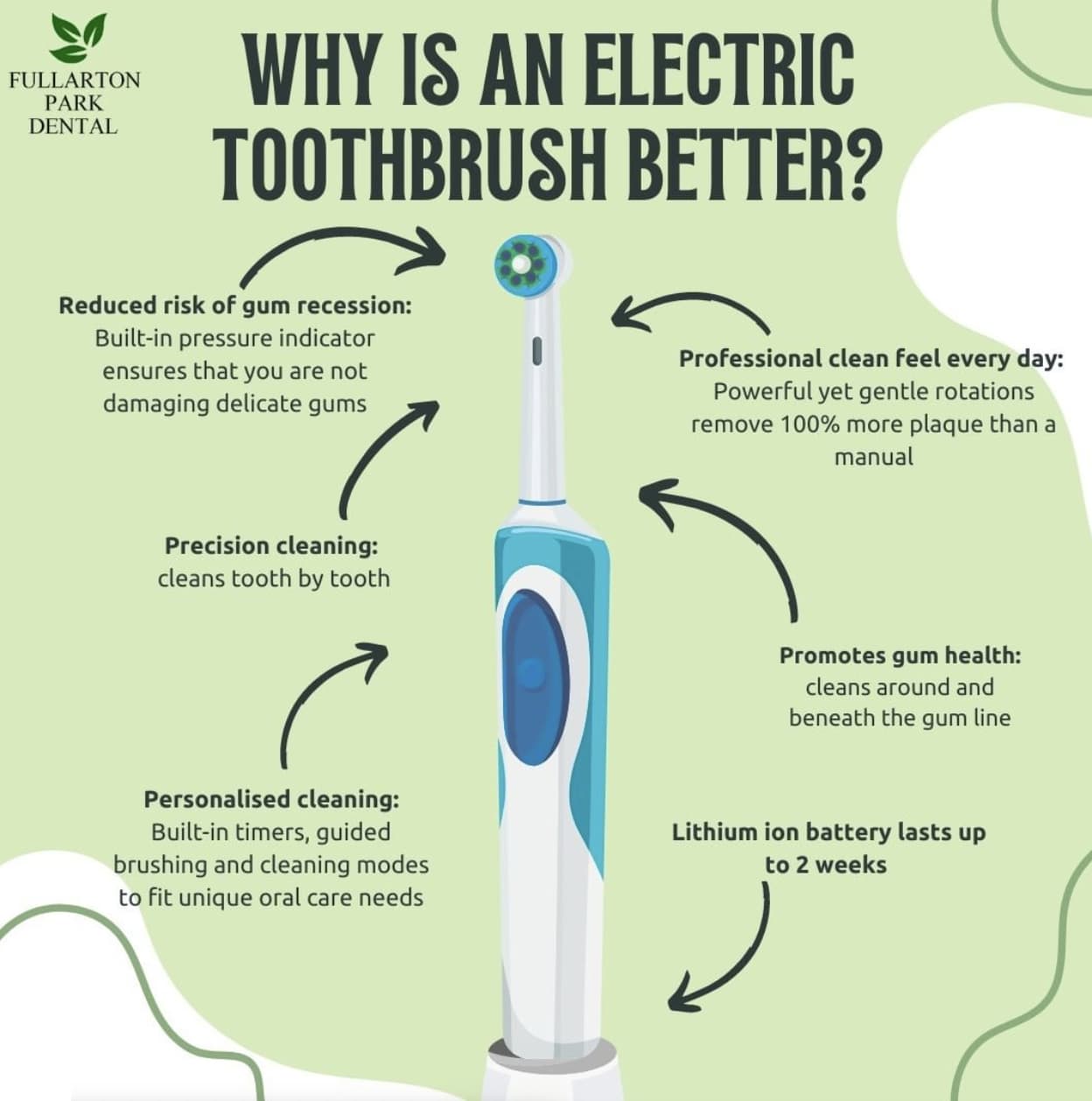
- Superior plaque removal: Clinical studies show oscillating-rotating electric toothbrushes can remove up to 100% more plaque than manual brushes in some tests. A well-known Cochrane review found about 21% more plaque reduction over three months or longer with powered brushes. This matters because plaque causes cavities and gum problems.
- Better gum health: Electric brushes reduce gingivitis (inflamed gums) more effectively. The same reviews report around 11% greater reduction in gingivitis risk. Pressure sensors stop you from brushing too hard, which protects gums and prevents recession.
- Built-in timer for proper brushing duration: Dentists recommend brushing for two full minutes. Many electric models divide this into 30-second quadrants with a gentle buzz or pause. This helps you cover all areas without guessing.
- Improved brushing technique: The fast movement loosens plaque biofilm better. You just need to move the brush slowly from tooth to tooth. This is especially useful for brushing technique improvement and long-term oral hygiene routine.
- Gentle on sensitive teeth and gums: Modes for sensitive teeth or gum care make brushing comfortable. Pressure control protects enamel and reduces irritation.
These benefits come from real studies and dentists’ feedback. A 2024 meta-analysis confirmed oscillating-rotating brushes outperform manual and even some sonic ones for plaque and gingivitis.
Benefits of electric toothbrush go beyond cleaning. They make the whole process more consistent, which leads to fewer dental visits for problems like tooth decay prevention or gingivitis reduction.
Are Electric Toothbrushes Better for Plaque Removal Effectiveness?
Yes—plaque removal effectiveness is one of the strongest reasons to switch. Plaque is a sticky film of bacteria that builds up on teeth. If you leave it, it hardens into tartar and causes issues.
Electric brushes break up this dental plaque biofilm more efficiently. The rotating or sonic action reaches small spaces better than hand scrubbing.
One meta-analysis of many trials showed powered brushes, especially oscillating-rotating types, give better results after a single brushing and over weeks of use. For everyday adults, this means fresher breath and less risk of cavities.
Parents often notice kids’ teeth look cleaner when using an electric model because the fun vibration encourages longer brushing.
Are Electric Toothbrushes Better for Gums and Gum Health?
Are electric toothbrushes better for gums? Most evidence says yes, especially for preventing or managing mild gum issues.
Gum disease starts with plaque along the gum line. Electric brushes clean this area gently yet thoroughly. Studies show they reduce bleeding and inflammation better than manual brushes over time.
The pressure sensor is a big help. Many people brush too hard with manual brushes, which can damage gums and cause recession. Electric models warn you and sometimes slow down, so you protect your gums while still cleaning well.
For people with receding gums or a history of gingivitis, this feature alone makes the upgrade worthwhile. Dentists often suggest them for patients working on gum health improvement.
Are Electric Toothbrushes Better for Whitening and Stain Removal?
Are electric toothbrushes better for whitening? They help prevent and reduce surface stains when paired with whitening toothpaste or special brush heads.
The consistent cleaning removes more everyday stains from coffee, tea, or food. Some models have a polishing or whitening mode that polishes teeth gently. One study found better stain prevention with certain electric brush heads compared to manual.
They do not replace professional whitening, but they support a brighter smile as part of your daily oral hygiene routine. Many users report their teeth feeling smoother and looking cleaner after switching.
Are Electric Toothbrushes Better for Braces and Orthodontic Care?
Are electric toothbrushes better for braces? Yes, they often make a noticeable difference for people with braces or other orthodontic appliances.
Brackets and wires create extra places for plaque to hide. Manual brushing can miss these spots. Electric brushes with small or specially shaped heads reach around braces more easily.
Research in orthodontics journals shows better plaque control and lower plaque scores for brace wearers using electric toothbrushes, especially those who had trouble with manual brushing before.
Are electric toothbrushes better for braces and orthodontic care is a common question from teens and their parents. The timer and gentle action help maintain good habits during treatment, reducing risks of white spots or gum issues around the braces.
Are Electric Toothbrushes Better for Kids and Toddlers?
Are electric toothbrushes better for kids and even toddlers (with supervision)? For many families, yes.
Kids often brush too quickly or miss areas. Electric models with fun designs, lights, music, or apps make brushing enjoyable. The built-in timer teaches them to brush for the full two minutes.
Smaller brush heads and soft bristles suit young mouths. Studies on children show electric brushes reduce plaque more effectively, helping develop strong oral hygiene habits early.
For parents, this means less worry about poor brushing. Electric toothbrush benefits for kids with poor brushing habits include better cleaning and more consistent routines. Always choose age-appropriate models and supervise young children.
Are electric toothbrushes are better for toddlers depends on the child’s readiness, but many pediatric dentists support them for better results with less effort from the child.
Are Electric Toothbrushes Better for Seniors or People with Limited Dexterity?
Seniors and anyone with arthritis, limited hand strength, or dexterity issues often find electric brushes much easier. You guide the brush instead of scrubbing hard. The motor does the work, so less strain on hands and wrists.
Better plaque control also supports overall health, since gum disease is linked to other conditions. Many models have larger, easy-grip handles.
Are electric toothbrushes better than regular toothbrushes for older adults? Evidence and dentists’ experience say yes for comfort and cleaning power.
Do Electric Toothbrushes Actually Clean Better Than Manual Ones? What Studies Say
Do electric toothbrushes actually clean better than manual ones? Multiple high-quality reviews, including Cochrane analyses, support that powered brushes—particularly oscillating-rotating ones—provide statistically significant improvements in plaque removal and gingivitis reduction.
- Short-term (1-3 months): About 11% better plaque reduction.
- Longer-term: Up to 21% better plaque reduction and 11% better gingivitis reduction.
Some studies show even higher advantages with advanced models. A 2023-2024 meta-analysis highlighted that oscillating-rotating brushes help more people reach a healthy gum state compared to manual or sonic options.
Not every single study shows huge differences, and good manual brushing still works well. But on average, electric brushes give better results for most people, especially over time. Electric toothbrush vs manual brushing effectiveness study results often favor electric for consistency.
Dentist recommended toothbrush lists in 2025-2026 frequently highlight ADA-approved electric models for these reasons.
Are Electric Toothbrushes Worth It? Budget-Conscious Comparison Shoppers
Are electric toothbrushes worth it? For many, yes, even if the handle costs more upfront.
Replacement brush heads cost similar to buying new manual brushes every few months. One handle can last 3-5 years with care. Over time, better cleaning can mean fewer dental problems and bills.
Affordable starter models exist with basic timer and pressure features. The best affordable electric toothbrush for beginners often includes simple rotating or sonic options from trusted brands.
Think about your needs: If you struggle with technique, have gum concerns, or want easier brushing, the investment pays off in healthier teeth and peace of mind. Is it worth switching to an electric toothbrush from a manual one? Most users who make the change say yes after a few weeks.
How Are Electric Toothbrushes Better for Your Teeth Long Term?
How are electric toothbrushes better shows up in daily habits and long-term oral health. Consistent two-minute brushing with good coverage reduces the risk of tooth decay. Better gum care lowers the chances of advanced gum disease.
Does an electric toothbrush improve oral hygiene long-term? Yes, because features like timers and sensors build better routines. Many people brush more thoroughly without realizing it.
Are electric toothbrushes better for your teeth overall because they help maintain enamel by avoiding overly aggressive manual scrubbing?
Are Sonic Toothbrushes Better Than Rotating Ones?
Are Sonic toothbrushes better than rotating toothbrushes? Both types work well, but studies often give a slight edge to oscillating-rotating (like many Oral-B models) for plaque and gingivitis reduction in head-to-head comparisons. Sonic (high-frequency vibration, like Philips Sonicare) offers a different feel and can be very effective, too.
Choose based on what feels comfortable. Many dentists say the best brush is the one you will use twice a day consistently. Sonic toothbrush cleaning power is strong, while an oscillating rotating toothbrush excels at physical plaque removal.
Choosing the Right Electric Toothbrush: Practical Tips
When shopping, look for these helpful features:
- ADA approval or Seal of Acceptance – shows the product met safety and efficacy standards for plaque removal and gingivitis reduction.
- Built-in 2-minute timer with quadrant alerts.
- Pressure sensor to protect gums and enamel.
- Soft bristles and replaceable heads.
- Modes for daily cleaning, sensitive, whitening, or gum care.
- Battery life – many last weeks on one charge.
The best electric toothbrush recommended by dentists for plaque removal often includes models with proven rotating or sonic technology. Start with a mid-range option if you are new to electric brushes.
Are electric toothbrushes better than normal or better than regular ones depends on using them correctly. Pair with fluoride toothpaste and daily flossing for best results.
How to Use an Electric Toothbrush the Right Way
Follow these simple steps for the best results:
- Wet the brush head and apply a pea-sized amount of toothpaste.
- Place bristles at a 45-degree angle to the gums.
- Turn on the brush and guide it slowly, tooth by tooth. Let the motor do the work—no hard scrubbing.
- Spend about 30 seconds per quadrant (upper right, upper left, lower right, lower left).
- Brush your tongue gently.
- Rinse the head and let it air dry.
Replace the head every 3 months or sooner if the bristles look worn. Clean the handle regularly.
Tips for Different Users
- Parents: Let kids pick a fun color or character head. Use kid-specific modes or smaller heads.
- Brace wearers: Use orthodontic brush heads if available. Brush after every meal when possible.
- Seniors or dexterity-limited: Choose lightweight handles with long battery life.
- Budget shoppers: Look for starter kits with extra heads. Compare long-term costs.
Potential Drawbacks and How to Handle Them
Electric brushes cost more initially and need charging or batteries. Heads need replacing every 3 months. Some people find the vibration ticklish at first, but most get used to it quickly. Noise can be an issue for light sleepers if charging in the bedroom.
These are small compared to the cleaning benefits for most users.
FAQs
Which is better, an electric or a manual toothbrush for sensitive teeth?
Electric with a sensitive mode and a pressure sensor is usually gentler and more consistent.
Do electric toothbrushes prevent cavities better than manual brushes?
They can, by removing more plaque daily, but good habits matter most.
Are electric toothbrushes better for the environment?
Some models use less plastic over time since only heads are replaced frequently, but check rechargeable batteries and recycling programs. Manual brushes are simple but need full replacement often.
Are electric toothbrushes better?
Reddit discussions often mention easier cleaning, fun for kids, and noticeable freshness after switching.
Conclusion
Are electric toothbrushes better? For the majority of people—everyday adults, parents, kids, seniors, and those with braces or gum concerns—the answer is yes. They offer electric toothbrush advantages like superior plaque removal, gentler gum care, consistent brushing time, and easier technique. Studies and dentist recommendations support that electric toothbrush vs manual toothbrush often favors electric for better oral health outcomes.