The Hidden Door in the Code: What Was the First Video Game Easter Egg?
Picture this. You sit in front of an old TV in the early 1980s. You hold a joystick. You play a simple game. Then something weird happens. A tiny gray dot appears. It is so small you almost miss it. You pick it up and carry it across the screen. Suddenly, you walk through a wall that looked solid. A secret room opens. Words flash: “Created by Warren Robinett.”
That moment felt like magic. It changed games forever. Many people still ask: what was the first video game easter egg? The answer is not simple. Warren Robinett hid a room in his game Adventure in 1980. It was for the Atari 2600. Most experts say this is the first video game Easter egg players could really find and enjoy. But older secrets exist, too. One came from 1977. The story of the first video game easter egg ever is full of clever tricks and bold moves by game makers.
So, what is an Easter egg? It is a hidden surprise in a game or program. It can be a secret message, a funny joke, or a special feature. You do not see it right away. You have to look hard or try odd things. Today, over 3 billion people play games. The industry makes hundreds of billions of dollars. Even small hidden surprises matter a lot. They make players talk, share videos, and play again and again.
To understand the first video game easter egg, go back to the late 1970s. Big companies like Atari made the rules. They did not put the names of the people who made the games on the box. The coders felt invisible. They wanted credit.
Warren Robinett and His Secret Gray Dot
Warren Robinett worked on a game called Adventure. It was one of the first games where you explored a big world. He felt angry that no one would know he made it. So he added a secret room with his name inside. He told no one at Atari. He finished the game and left the company.
The old Atari 2600 had very little memory. Just 4KB for the whole game. That is tiny. A photo on your phone today is much bigger. Robinett used only about 200 bytes — around 5% of the space — for his hidden room. He had to be super smart with every single bit.
How did players find it? It was tricky. On the hardest setting, a tiny light-gray dot hid in a dark area. It looked almost like nothing. Most things in the game moved in certain ways. This dot acted differently.
To open the secret, you had to:
- Grab the gray dot.
- Carry it a long way (while holding other items too).
- Go to one exact spot near the Yellow Castle.
- Walk into a black wall while the dot was with you.
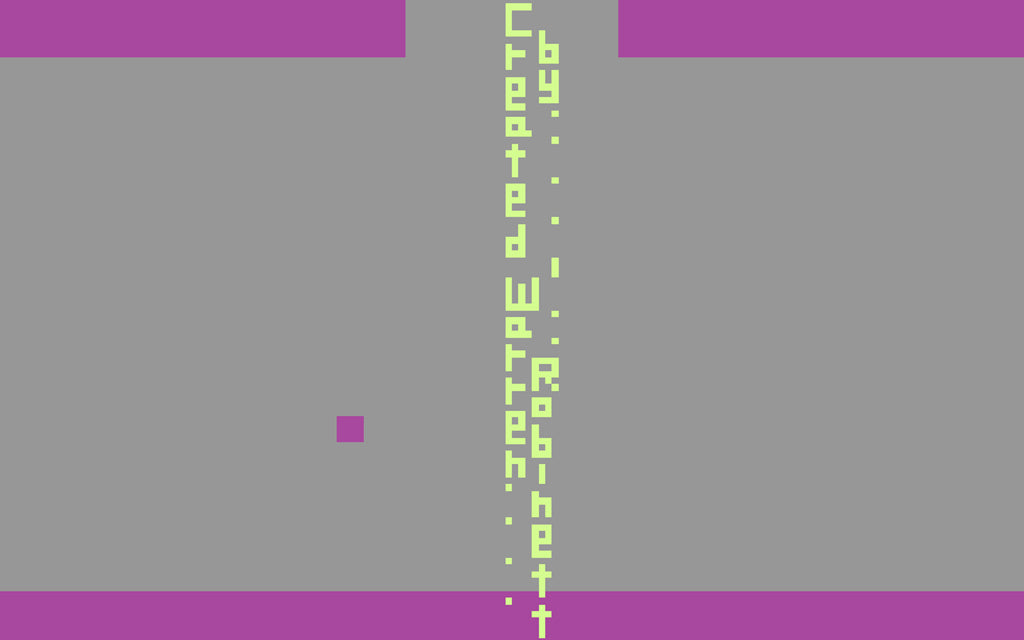
The wall opened. You saw a purple room. The words “Created by Warren Robinett” flashed on screen.
A boy named Adam Clayton found it in 1980. He was only 15. He wrote a letter to Atari. The company was shocked but left the secret in the game. Inside Atari, people started calling these surprises “Easter eggs.” The name stuck.
This small act helped change the industry. Many coders felt upset about no credit. Soon after, Activision started. It was the first company to let teams put their real names on games. Warren Robinett showed that one hidden message could make a big difference. He is the one who created the first video game easter egg that players loved.
An Even Older Secret: Starship 1 from 1977
For a long time, people thought Robinett’s room was the very first. Then, in 2017, game historians found something older.
The game Starship 1 came out in 1977. It was an arcade game. Ron Milner made it. He hid a simple message: “Hi Ron!” It was like a note to himself.
You had to press a special mix of buttons and coin slots to see it. It was not made for regular players. It was more like a tool for the maker to test his code. That is a big difference. Robinett wanted players to find his secret and smile. The “Hi Ron!” message was not for fun discovery. It stayed hidden for years because normal play would not show it.
Museums like The Strong National Museum of Play helped tell this story. So when people ask what the first video game easter egg was, we now know that older things existed. But Robinett made the first one built for players.
Early Hidden Secrets Timeline
Game makers started hiding their names before companies gave credit. Here is a simple look at the early days:
| Year | Game Title | Machine | What Was Hidden |
| 1977 | Starship 1 | Arcade | “Hi Ron!” message |
| 1978 | Video Whizball | Fairchild Channel F | Developer names |
| 1980 | Adventure | Atari 2600 | Secret room with Robinett’s name |
These were quiet protests. Coders wanted to say “I made this” even when bosses said no.
Why It Was So Hard to Hide Things Back Then
Old machines had almost no space. The Atari 2600 had 4KB of memory and only 128 bytes of working room. Think about that. A single modern picture uses way more space. Game makers squeezed everything in. They fought for every byte.
Today, games use gigabytes — over a billion times more space. Back then, hiding even a small message took real skill. These secrets felt like graffiti on a wall. They let makers leave their mark.
Now, fans use old emulators to dig through the code. They find surprises that have stayed hidden for decades.
How Easter Eggs Changed Over Time
At first, Easter eggs were small rebellions. Then they became fun features. Now big companies use them on purpose to get players excited.
Hidden surprises make you play longer. They spark questions. Friends talk about them online. Some new games have hundreds of secrets.
Look at these examples:
- Halo 3 had secret skulls and messages.
- Grand Theft Auto V is full of strange mysteries.
- The movie and book Ready Player One loved the idea of hunting secrets. It even showed Robinett’s room.
The first video game easter egg started something huge.
Why Do We Still Search for Hidden Things?
Warren Robinett did not make the absolute first hidden code. But he made the first video game easter egg meant for players. That matters most.
Finding a secret feels good. Your brain gets a happy rush. It is like solving a little puzzle. People love to discover and to leave their own mark.
Games are more than scores and levels. They are places where humans connect. A secret room from 1980 still makes us smile today.
Next time you play, look closer. Check odd walls. Try weird moves. You might find a hidden door.
What was the first Easter egg you ever found? Tell me in the comments. Your story could help someone else start hunting.
FAQs
What was the first video game Easter egg?
Most people say it is the secret room in Adventure from 1980. Warren Robinett put his name inside. Players could find it with smart moves.
Who created the first video game easter egg?
Warren Robinett did. He hid his name in Adventure because Atari would not give him credit.
Was there anything older than Adventure?
Yes. Starship 1 in 1977 had a “Hi Ron!” message. But it was a tool for the maker, not a fun surprise for players.
How did players find Robinett’s secret?
They carried a tiny gray dot to one special spot and walked into a wall. A boy named Adam found it first and wrote to Atari.
Why did Robinett hide his name?
Atari did not let coders put their names on games. He wanted to show “I made this.”
Conclusion
So, who created the first video game easter egg? Technically, earlier hidden messages existed, such as the “Hi Ron!” in Starship 1. But Warren Robinett didn’t just hide code — he created the first player-focused Easter egg, one deliberately designed to be discovered and celebrated by the audience.
This distinction is crucial. Robinett’s creation turned a technical curiosity into a cultural phenomenon. It proved that games could contain layers of meaning beyond the obvious, rewarding persistence and curiosity.