Tech Career Roadmap Generator 2026
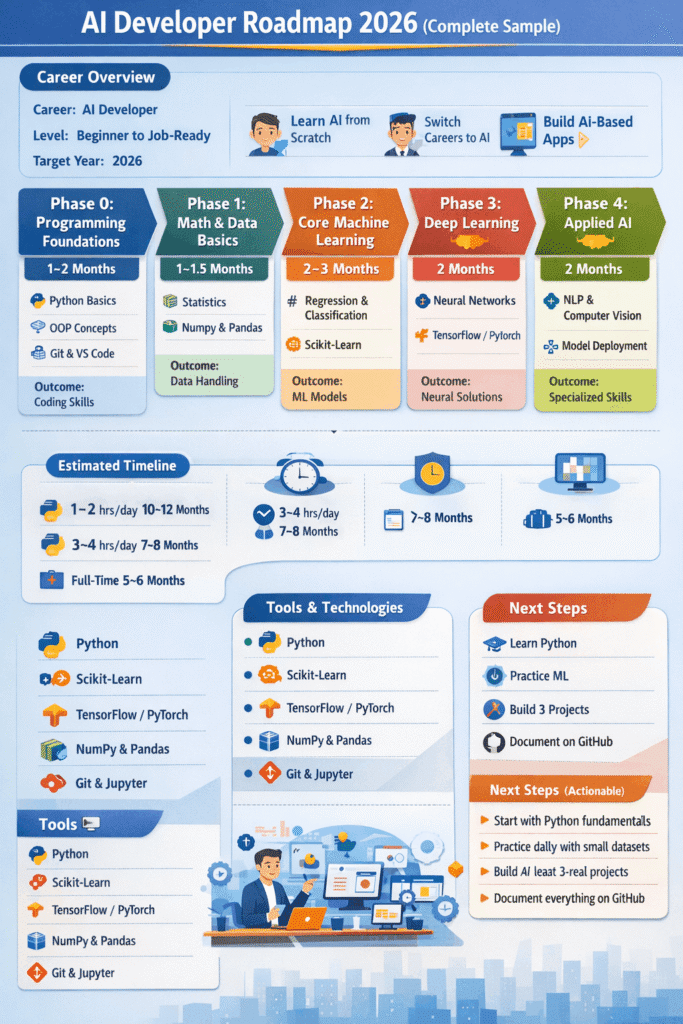
Tech Career Roadmap Generator 2026 – AI Developer Path
Artificial Intelligence in 2026 is no longer just a single skill. It has become a full career ecosystem. AI developers are now central to building modern apps, smart systems, automation tools, and intelligent experiences. If you want to become an AI developer but don’t know where to start, this step-by-step roadmap will give you direction.
This page features an AI Developer Roadmap Generator that creates a personalized learning plan, guiding you from beginner to job-ready level.
What Is an AI Developer in 2026?
An AI developer is a professional who builds intelligent systems using data, algorithms, and software. In 2026, AI is everywhere:
- Embedded in web apps
- Making mobile apps smarter
- Driving realistic behavior in games
- Powering business automation and analytics
AI developers combine programming, data skills, and problem solving to turn ideas into real products.
Who Should Use This AI Developer Roadmap Tool?
This roadmap is designed for:
- Complete beginners who want to start learning AI
- Developers shifting from software or web development into AI
- Students preparing for future tech careers
- Independent learners who need clear direction
If you’ve ever asked, “What should I learn first and next?”, this roadmap answers that question.
How the Roadmap Generator Works
The tool builds a learning plan based on your goals and experience:
- Choose your target career path
- Pick your current skill level
- Set your daily learning time
Then it provides:
- Step-by-step learning phases
- Skill lists you need to learn
- Tools and technologies to master
- Target timelines for progress
Everything is designed to be practical and aligned with 2026 industry demand.
Skills You Will Learn
This roadmap covers essential skill areas for AI developers:
- Python programming and syntax
- Data handling and analysis
- Machine learning algorithms
- Deep learning foundations
- AI use cases in apps and systems
- Real world portfolio projects
- Career preparation and interviewing
Each phase builds on the last, making your progress logical and achievable.
Why This Roadmap Matters for 2026
By 2026, the focus in AI is no longer just theory. Companies want developers who can integrate AI into real products. This roadmap emphasizes:
- Practical, hands-on skills
- Tools used by industry professionals
- Project-based learning
- Ethical AI awareness
This makes it career-oriented, not just academic.
How to Use This Roadmap Effectively
Getting results requires action:
- Practice every day, even in small blocks
- Build small projects after each module
- Publish your work on GitHub
- Take notes and summaries for better retention
Consistency is the key to success in AI learning.
Career Opportunities After Completing the Roadmap
Once you complete the roadmap, you can:
- Apply for Junior AI Developer roles
- Build AI-powered applications
- Take freelance AI projects
- Move toward Data Science or ML Engineering roles
AI skills are in strong demand today and will continue to grow in 2026 and beyond.
Frequently Asked Questions
Is this roadmap suitable for complete beginners?
Yes. There is a foundation phase that covers Python and essential concepts.
How long does it take to become an AI developer?
With 1–2 hours of study per day, many learners reach a job-ready level in 10–12 months. Full-time learners can progress faster.
Do I need strong math for AI?
You do not need advanced math. Understanding basic statistics and introductory linear algebra is enough, and these topics are covered.
Will this roadmap help me get a job?
No roadmap can guarantee a job. However, strong projects and a good portfolio significantly improve your opportunities.
Is this roadmap updated for 2026?
Yes. It reflects current industry tools, practices, and learning paths relevant to the latest job market.
Final Advice
Learning AI is a long journey, not a race. Use this roadmap as a practical guide, not a source of pressure. Build your skills gradually, complete projects, and focus on solving real problems.
The tool above gives you your best starting point. The rest is up to you.