Technical Debt: Real Examples and Consequences
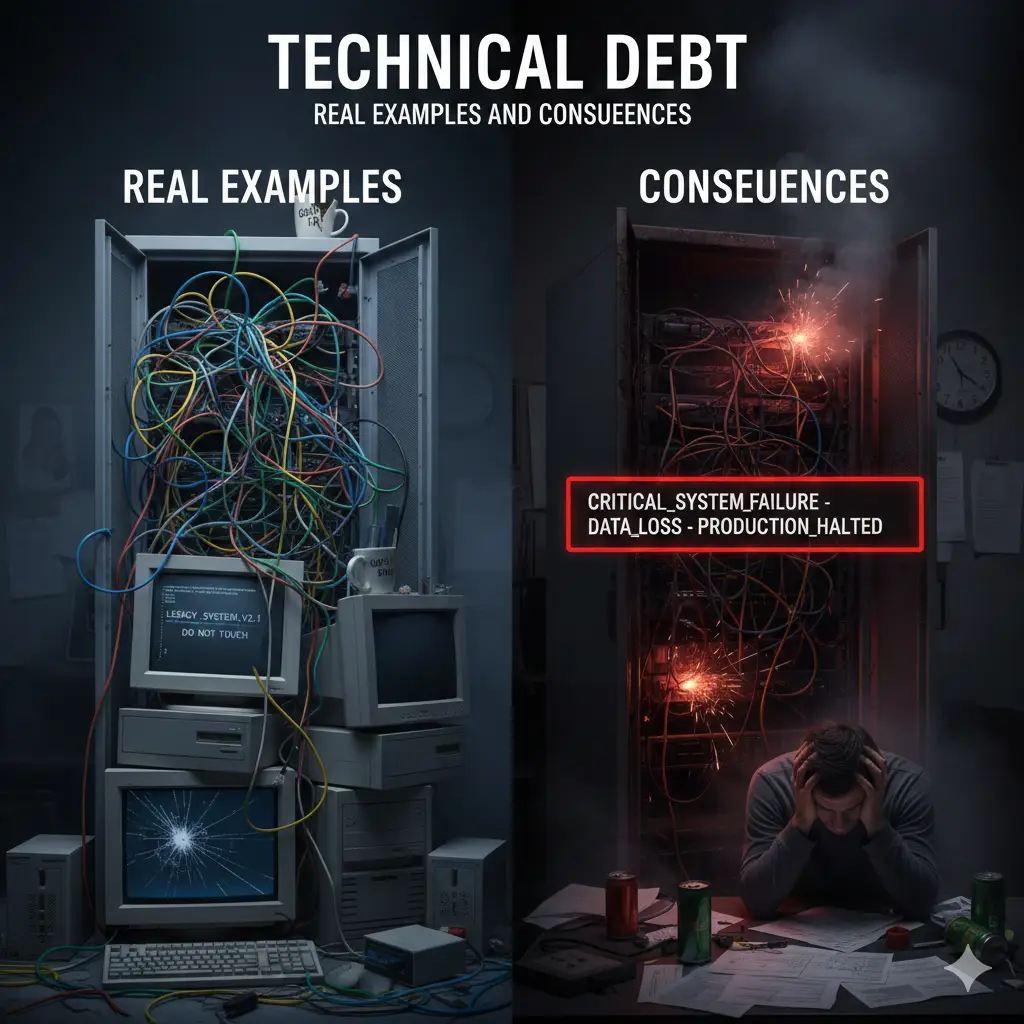
Technical debt: real examples and consequences hit every software team at some point. You take shortcuts to ship features fast. These choices save time now but cost more later. Think of it like borrowing money—you pay interest in bugs, slow fixes, and unhappy users. Ward Cunningham coined the term in 1992. He compared quick code to debt that needs repayment with refactoring.
Teams face this often in fast-paced work. Pressure to deliver leads to hacks or skipped tests. Over time, the code gets messy. New changes take longer. Bugs pop up more. In bad cases, systems crash or companies lose big money. This guide shows real stories, explains types of technical debt, and gives tips to handle it. You will see why tracking it keeps your projects healthy.

What Is Technical Debt?
Technical debt means the extra work you create when you choose easy fixes over better ones. It builds up from rushed code, old tools, or poor plans. Like real debt, it grows interest—more time on fixes instead of new features.
Some debt is on purpose. Teams ship a basic version fast to test ideas. This can be smart if you fix it soon. Other debt happens by accident, from mistakes or lack of skills.
Experts use the technical debt quadrant from Martin Fowler to sort it. It looks at if the debt was planned and if it was wise.
Here are the four parts:
- Prudent and deliberate: You choose it wisely, like for a quick launch. Plan to pay it back.
- Reckless and deliberate: You rush without care, like saying “we’ll fix it later” but never do.
- Prudent and inadvertent: You do your best, but learn better ways later.
- Reckless and inadvertent: Bad practices from not knowing or not caring.
Knowing these helps teams decide what to fix first.
Types of Technical Debt
Debt comes in many forms. Common types of technical debt include:
- Code debt: Messy or repeated code that’s hard to change.
- Design debt: Poor structure that limits growth.
- Testing debt: Few tests, leading to hidden bugs.
- Documentation debt: Missing guides, slowing new team members.
- Infrastructure debt: Old tools or setups that break often.
- Architecture debt: Big design flaws, like monoliths that can’t scale.
In examples of technical debt in agile, teams often add debt during sprints to hit goals. Agile helps spot it early with reviews, but speed can still build it up.
Technical Debt: Real Examples and Consequences from History
Real stories show how debt hurts. These biggest software failures in history teach big lessons.
The Y2K Problem
In the 1960s, coders saved space by using two digits for years, like “70” for 1970. This was a small shortcut then. By the 1990s, it risked systems thinking 2000 was 1900. Companies spent over $100 billion fixing it worldwide. No big crash happened, but it showed how old debt explodes.
Knight Capital Trading Disaster (2012)
Knight Capital reused old, untested code for a new feature. In 45 minutes, it lost $440 million buying wrong stocks. The company sold off soon after. This technical debt example highlights risks from poor testing.
Friendster’s Scalability Failure
Friendster led social networking early but ignored code cleanup. Pages loaded slow as users grew. People switched to MySpace and Facebook. Friendster failed due to unscalable tech.
Nokia’s Decline
Nokia skipped updates to its old OS. It couldn’t handle touchscreens like the iPhone. Debt made changes too hard. Microsoft bought it and wrote off billions.
Southwest Airlines Outage (2022)
Old crew scheduling systems couldn’t handle bad weather. Over 16,000 flights were canceled. Costs hit hundreds of millions in refunds. This shows operational debt in key systems.
These cases prove unmanaged debt leads to lost money, users, or whole businesses.
What are the biggest software failures in history from technical debt?
- Y2K → Billions spent fixing old date code.
- Knight Capital → $440M loss in minutes from bad code reuse.
- Friendster → Lost to Facebook from slow, unclean code.
- Nokia → Couldn’t adapt OS fast enough.
More Stories from Software Teams
Experts share anonymized tales too.
One company used simple if-then code for languages instead of proper tools. Adding new ones got hard fast.
A bank built fast without planning scale or security. They hit a wall and rewrote a lot of code.
An old firm had millions of lines with no docs or tests. Small changes took days to check.
Rapid hiring led to uneven skills and more bugs in one group.
But one small team took shortcuts for a test version, learned from users, then fixed it well. This shows good debt use.
For deeper reads, check these sources:
- Five examples of technical debt and software failures
- Managing technical debt: 5 stories from the field
What are the main types of technical debt?
Common types include:
- Code debt — Messy, repeated, or hard-to-read code.
- Design/architecture debt — Poor structure that blocks growth or scale.
- Testing debt — Few or no automated tests, leading to hidden bugs.
- Documentation debt — Missing guides that slow new team members.
- Infrastructure debt — Old tools or setups that fail often.
Outdated dependencies — Old libraries with security holes.
Consequences of Ignoring Technical Debt
Left alone, debt causes:
- Slower work: Teams fix old issues instead of building new.
- More bugs: Quick fixes hide problems that grow.
- Security risks: Old code has weak spots.
- Low team spirit: Constant firefighting frustrates people.
- Higher costs: Up to 30% of IT budgets go to debt.
Stats show 20-40% of codebases hold debt. It acts like a hidden drag.
What are some real technical debt examples?
- Copy-pasting code → Changes need many updates.
- Hard-coding values → No easy config changes.
- Skipping tests → Bugs appear later.
- Using old libraries → Security risks build.
- Quick hacks for features → Code gets tangled.
Historic cases: Y2K from two-digit years; Knight Capital’s $440M loss from untested code.
How Technical Debt Shows Up in Agile Teams
Agile pushes fast delivery, so technical debt meaning in agile ties to sprint choices. Teams might skip full tests for velocity. Or carry stories over without cleanup.
Good agile fights this with:
- Strong “done” rules.
- Time for fixes in sprints.
- Retros to spot debt.
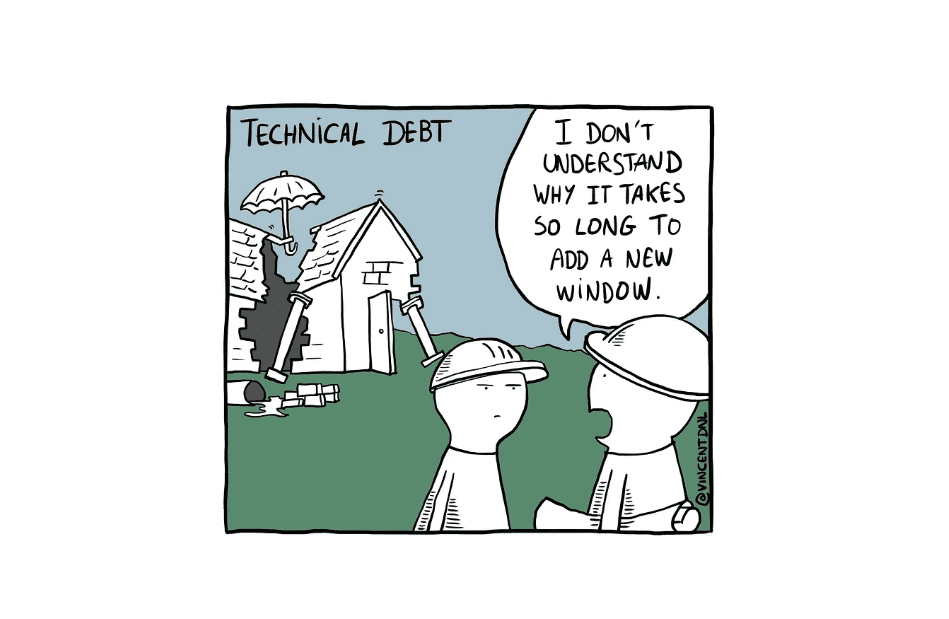
Use a technical debt template to track items like backlog cards.
Tips to Manage and Reduce Technical Debt
You can control debt. Follow these steps:
- Spot it early: Use tools to scan code for issues.
- Track it: Add debt items to your backlog.
- Prioritize: Fix high-risk ones first.
- Set time aside: Give 20% of sprints to cleanup.
- Write clean code: Follow principles for better habits. See this guide on clean code principles with real examples.
- Test well: Automate to catch problems fast.
- Review often: Pair code or hold reviews.
- Refactor small: Fix bits as you work.
- Plan big: Think architecture early. Learn more in system design interviews explained.
- Teach the team: Share why debt matters.
How do you pay off or manage technical debt?
Steps:
- Spot it with reviews and tools.
- Track in backlog.
- Prioritize high-impact items.
- Set time (like 20% of sprints) for fixes.
- Refactor often in small steps.
- Prevent clean code and standards.
For fixing bugs quick, try these debugging techniques.
Choose monolith or microservices wisely to avoid debt—read microservices vs monolith architecture.
What is the technical debt quadrant?
Martin Fowler’s technical debt quadrant sorts debt into four groups:
- Prudent and deliberate → Smart choice, like quick launch with fix planned.
- Reckless and deliberate → Rush without care, like “fix later” but never do.
- Prudent and inadvertent → Best effort, but better ways found later.
- Reckless and inadvertent → Mistakes from poor skills or haste.
Secure APIs too: Follow API security best practices.

Understand the full cycle in software development lifecycle explained.
FAQs About Technical Debt
What is technical debt?
Technical debt happens when teams pick quick, easy fixes instead of better long-term solutions. This saves time now but costs more later in fixes, bugs, and slow changes. Ward Cunningham coined the term in 1992. He compared it to borrowing money – you pay interest over time.
Is technical debt always bad?
No. Some debt is smart and planned. Teams take it on purpose to ship fast, like for a market test or deadline. It turns bad if ignored. Then it grows “interest” like more bugs, higher costs, and risks.
This helps teams prioritize fixes.
What causes technical debt?
Common causes:
- Tight deadlines pushing shortcuts.
- Changing needs are not handled well.
- Lack of skills or experience.
- Poor planning or reviews.
- Business pressure for fast features over quality.
In examples of technical debt in agile, it often comes from sprint velocity goals, like skipping tests.
How does technical debt affect teams and projects?
It causes:
- Slower new work (teams fix old issues).
- More bugs and crashes.
- Higher costs (up to 40% of IT budget).
- Low team morale from constant fixes.
- Risks like security holes or scale failures.
How common is technical debt in agile teams?
Very common. Agile pushes fast delivery, so technical debt meaning in agile ties to sprint trade-offs. Good teams fight it with “definition of done” rules and refactor time1.
How can teams measure technical debt?
Use:
- Code scans for complexity or duplicates.
- Bug rates and fix times.
- Velocity drops over time.
- Tools like SonarQube.
- Backlog items tracked as debt.
Some use a technical debt template for stories.
When should you take on technical debt on purpose?
When short-term speed helps more, like MVP launch or market edge. Always plan payback soon.
These FAQs give clear answers for daily work. Spot and manage debt early to keep projects healthy.
In Conclusion: Handle Technical Debt Proactively
Technical debt: real examples and consequences prove it’s a real risk but one you can manage. From Y2K billions to airline chaos, stories warn us. Spot types early, use the technical debt quadrant, and act in agile ways. This keeps code clean, teams happy, and projects on track2.
Smart handling turns debt into a tool, not a trap. What step will you take first to check your project’s debt?
References
- Carnegie Mellon SEI Blog: Managing the Consequences of Technical Debt – 5 Stories from the Field – Anonymized real-team stories for tech leads and managers on practical debt impacts and strategies. ↩︎
- Software Improvement Group Blog: Technical Debt Examples and Software Failure Examples ↩︎