App Monetization Strategies Explained: Proven Ways to Earn from Your Mobile App
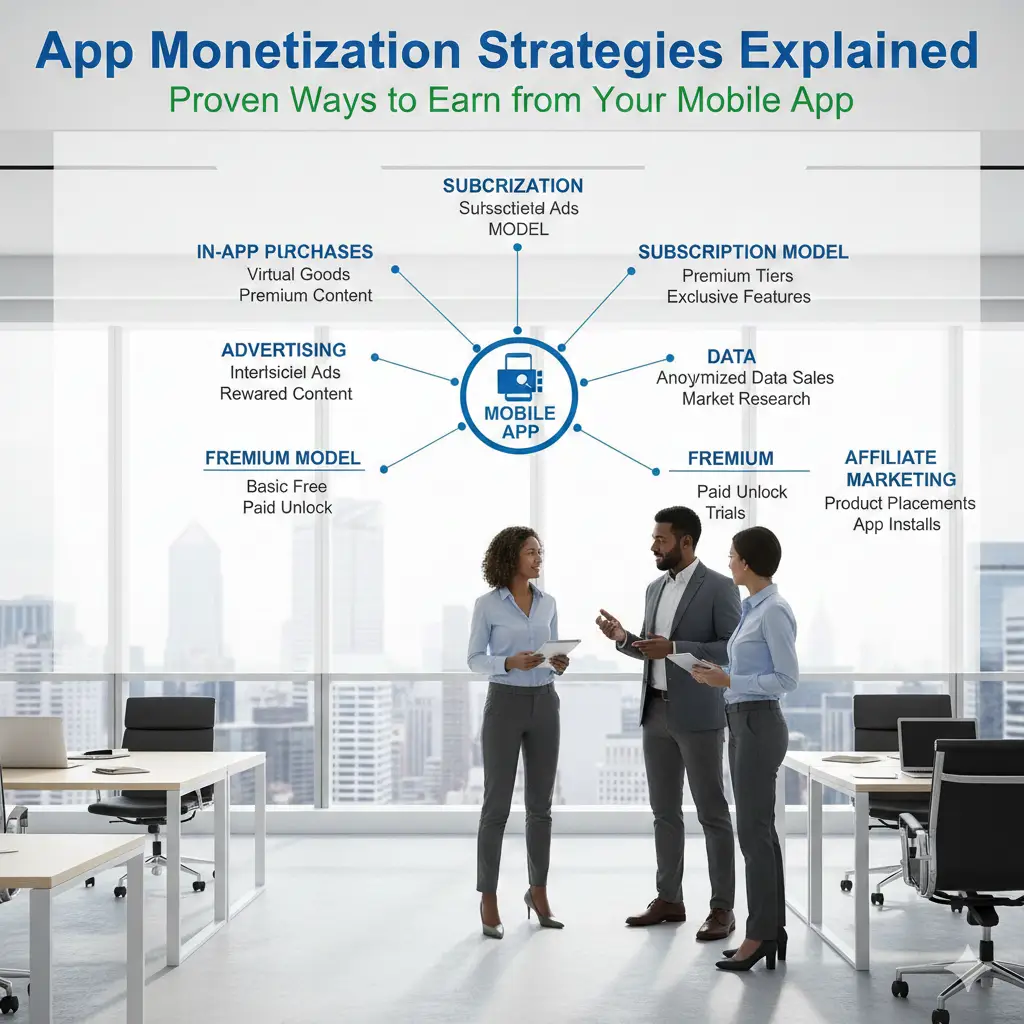
App Monetization Strategies Explained helps app developers, product managers, and startup founders turn their mobile creations into steady income. In today’s market, over 95% of apps on Google Play and the Apple App Store are free to download. They earn money through smart methods like ads, purchases inside the app, and subscriptions. Global mobile app revenue is set to hit around $613 billion in 2025, driven by in-app purchases, ads, and recurring plans. This guide breaks down the top app monetization strategies explained step by step. You’ll learn what each method means, its pros and cons, real examples, and tips to pick the right one for your app. Whether you build games, productivity tools, or fitness apps, these ideas help you earn more without pushing users away.
Why App Monetization Matters
Mobile apps face tough competition. Millions exist, but only a small number make real money. Good app monetization strategies explained let you cover costs, pay your team, and keep improving your app. Without them, even great ideas fade away.
Key facts show the opportunity:
- Free apps generate 98% of all mobile revenue.
- In-app advertising will reach about $390 billion worldwide this year.
- Subscriptions and in-app purchases drive most growth, especially in non-gaming apps.
The right model matches your app type, users, and goals. Many top apps mix methods for the best results.
Understanding the Main App Monetization Models
Here are the core ways to earn from your app. Each fits different needs.
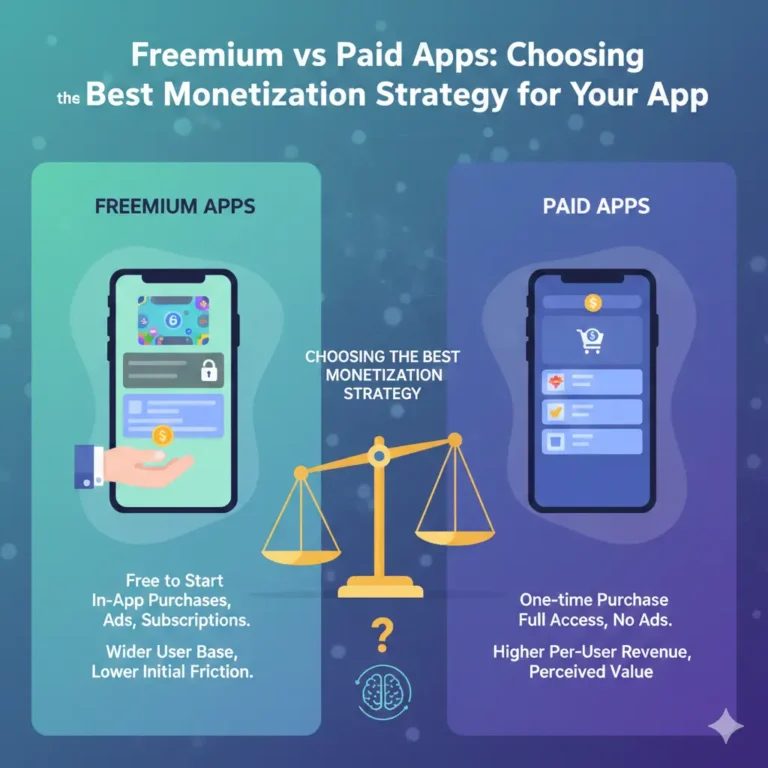
1. Freemium Model – Free Core with Paid Upgrades
Offer your app for free but charge for extra features. Users try everything basic without risk. Then, they pay to unlock more.
Pros:
- Easy to get lots of downloads.
- Builds a big user base fast.
- Turns engaged users into paying ones.
Cons:
- Low conversion rates (often under 5%).
- Needs strong free features to hook users.
Examples:
- Canva lets you design for free but charges for premium templates.
- Spotify plays music with ads but offers ad-free listening for a fee.
Tips:
- Make the free version useful enough to keep users coming back.
- Show premium features clearly so people see the value.
2. In-App Purchases (IAPs) – Sell Items Inside the App
Users buy virtual goods, extra lives, or premium tools while using the app.
Pros:
- Earns from active users.
- Works great with games and creative apps.
- Flexible pricing (small buys add up).
Cons:
- Platform fees (up to 30%).
- Some users feel pressured.
Examples:
- Clash of Clans sells gems for faster progress.
- Fitness apps sell workout plans or ad removal.
Tips:
- Offer deals at key moments, like when users hit a limit.
- Use limited-time offers to boost sales.
3. Subscription Model – Recurring Payments for Ongoing Value
Charge monthly or yearly for full access. Great for apps with fresh content.
Pros:
- Steady income you can predict.
- Higher lifetime value per user.
- Builds loyalty.
Cons:
- High churn if value drops.
- Users face “subscription fatigue.”
Examples:
- Netflix charges for unlimited shows.
- Headspace offers daily meditation for a fee.
Tips:
- Start with a free trial (7-30 days).
- Offer annual plans at a discount to lower churn.
4. Paid Upfront Apps – Charge Once to Download
Users pay a one-time fee before they install.
Pros:
- Instant money per download.
- No need for ads or extra sales.
Cons:
- Fewer downloads (people prefer free).
- Hard to compete with free options.
Examples:
- Procreate charges once for full drawing tools.
- Some productivity apps sell for $4.99.
Tips:
- Use this for niche tools with clear value.
- Offer updates for free to keep buyers happy.
5. In-App Advertising – Earn from Ads Users See
Show ads inside your app. You get paid per view, click, or action.
Pros:
- Works with free apps.
- No payment needed from users.
- Many formats to choose from.
Cons:
- Too many ads annoy users.
- Revenue depends on traffic.
Examples:
- Games use rewarded videos for extra lives.
- News apps show banner ads.
Tips:
- Place ads at natural breaks (like level ends).
- Use rewarded ads – users watch for bonuses.
6. Hybrid Models – Combine Methods for Best Results
Mix two or more strategies. Most successful apps do this.
Pros:
- Reaches all user types.
- Spreads risk.
- Boosts total revenue.
Cons:
- Harder to manage.
- Needs careful balance.
Examples:
- Free app with ads + option to buy ad removal + subscriptions.
- Games with ads for free users and IAPs for players.
Tips:
- Start simple, then add more.
- Track what works best with data.
Best App Monetization Platforms to Use in 2025
Pick the right tools to run your plan smoothly. Here are top app monetization platforms:
- Google AdMob – Best for ads. Easy setup, many formats, high fill rates.
- AppLovin MAX – Strong for games. Uses bidding to raise earnings.
- Unity Ads – Great for Unity-built apps. Good rewarded videos.
- ironSource – Full mediation for ads and IAPs.
- Chartboost – Focuses on cross-promotion in games.
Tips for choosing:
- Test a few to see what fits your app.
- Look for easy integration and clear reports.
How to Monetize an App with Ads Step by Step
Many start with ads. Here’s a simple guide for how to monetize an app with ads:
- Pick your ad format – Banners for quiet spots, videos for rewards.
- Join a network – Sign up for AdMob or similar.
- Add the SDK – Follow docs to put code in your app.
- Place ads smartly – Avoid overload; use natural breaks.
- Test and track – Watch eCPM and user feedback.
- Optimize – Try new placements or formats for better results.
Rewarded ads often work best – users choose to watch for perk1s.
Choosing the Right Strategy for Your App
Match your model to your app:
- Games → IAPs + rewarded ads2.
- Productivity → Freemium + subscriptions.
- News/Media → Ads + subscriptions.
- Fitness/Wellness → Subscriptions + IAPs.
Key factors:
- User age and location.
- How often they use the app.
- Willingness to pay.
Test early. Use analytics to see what drives revenue and keeps users.
Common Mistakes to Avoid
- Too many ads → Users leave.
- Hidden fees → Lose trust.
- No free value → Few downloads.
- Ignore data → Miss chances to improve.
Fix these by listening to users and testing changes.
FAQs About App Monetization Strategies Explained
What does app monetization meaning cover?
App monetization meaning refers to the ways developers earn money from their apps. This includes ads, in-app buys, subscriptions, and more. It turns free downloads into real income.
Introducing the redesigned AdMob with new tools that make it even …
Which are the best app monetization strategies explained for beginners?
Beginners often start with freemium or ads. These attract users fast and build revenue without big upfront costs. Freemium gives a free version with paid upgrades.
What are the top 10 app monetization platforms or key ones in 2025?
Top choices include Google AdMob, AppLovin MAX, Unity Ads, and ironSource. These best app monetization platforms handle ads and mediation well.
Introducing the redesigned AdMob with new tools that make it even …
How can I how to monetize an app with ads?
Join a network like AdMob, add the code, place ads carefully, and optimize. Use banners, interstitials, or rewarded ads for best results.
What app monetization model works for most apps?
Hybrid models combine free access, ads, and paid options. This reaches more users and boosts earnings.
Do I need special app monetization requirements like accounts?
Yes. Set up developer accounts on app stores and ad networks. Follow rules for in-app purchases and ads.
In Conclusion
App Monetization Strategies Explained show there is no one perfect way. The best path depends on your app, users, and goals. Start with freemium or ads to grow your base. Add subscriptions or purchases as users engage more. Hybrid models often bring the highest earnings. In 2025, focus on value first – happy users pay more and stay longer. Track data, test ideas, and adjust often. With smart choices, your app can thrive and earn steady income.
What monetization model fits your app best right now? Share in the comments – we’d love to hear your thoughts3!
References
- Userpilot: App Monetization Strategies – Detailed pros, cons, examples, and tips for choosing based on app type and stage. ↩︎
- Google AdMob: 5 App Monetization Strategies – Practical advice on free/paid versions, subscriptions, IAPs, and partnerships. ↩︎
- Adjust Glossary: App Monetization – Clear definitions and models for developers and marketers. ↩︎