App Development Cost Estimator 2026
Planning an app without understanding the cost can lead to wasted time and money. App development costs vary widely depending on features, complexity, design, and platform. This App Development Cost Estimator 2026 is designed to help you get a realistic cost range before you start building.
Whether you are a startup founder, business owner, or developer, this tool gives you clarity and helps you make better decisions.
How Much Does App Development Cost in 2026?
In 2026, app development costs depend more on scope and complexity than just the platform. A basic app may cost a few thousand dollars, while advanced applications with real-time features, payments, or AI can cost significantly more.
Typical cost ranges:
- Basic apps: $2,000 – $4,000
- Medium complexity apps: $5,000 – $10,000
- Advanced apps: $12,000+
These are estimates, not fixed prices. The final cost depends on what you actually build.
Factors That Affect App Development Cost
Several factors influence the total cost of app development. Understanding these helps you control your budget.
App Type
Android, iOS, cross-platform, and web apps all have different development requirements. Cross-platform apps often reduce cost compared to building two separate native apps.
App Complexity
A simple app with limited screens costs less than an app with real-time data, user accounts, or third-party integrations.
Features
Each feature adds development time and cost. For example:
- Login systems
- Payment gateways
- Chat and messaging
- Push notifications
Design Level
Basic UI costs less, while custom or premium UI/UX requires more time and expertise.
Development Team
Solo developers, small teams, and agencies all have different pricing models.
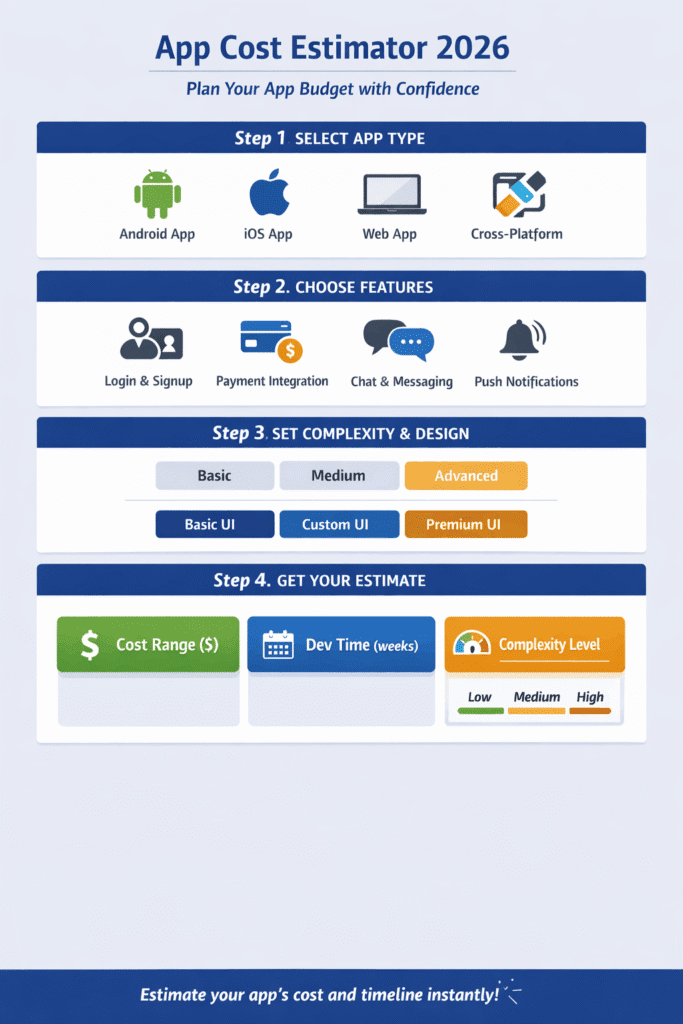
📌 Use the App Development Cost Estimator Tool
App Development Cost Estimator 2026
Use the tool above to select your app type, features, and complexity. It instantly calculates an estimated cost range and development time so you can plan confidently.
Basic vs Advanced App Development Cost
Not all apps need advanced features. Choosing the right level can save money.
Basic Apps
Best for MVPs and simple ideas.
- Static content
- Basic forms
- Minimal backend
- Lower cost and faster delivery
Advanced Apps
Required for scalable products.
- Real-time data
- Payments and subscriptions
- Admin panels
- APIs and integrations
Advanced apps cost more but support long-term growth.
How to Reduce App Development Cost
You can reduce costs without sacrificing quality by:
- Starting with an MVP
- Avoiding unnecessary features
- Using cross-platform frameworks
- Planning features before development
A clear scope always leads to better cost control.
What This Cost Estimator Tool Includes
This tool estimates cost based on:
- App type
- Feature selection
- Complexity level
- Design requirements
It does not use real-time pricing or APIs. Instead, it uses logic-based calculations aligned with current industry practices.
Who Should Use This Tool?
This tool is useful for:
- Startup founders planning MVPs
- Business owners exploring app ideas
- Freelancers estimating project scope
- Students learning app development planning
Frequently Asked Questions (FAQ)
How accurate is this app cost estimator?
The tool provides a realistic cost range, not an exact quote. Final pricing depends on requirements and development team.
Can this tool replace a professional quote?
No. It helps with early planning. For final pricing, detailed requirements and discussions are required.
Does the estimator work for both Android and iOS apps?
Yes. You can select Android, iOS, cross-platform, or web apps.
Why do app development costs vary so much?
Costs vary due to feature complexity, design effort, integrations, and team experience.
Is this estimator updated for 2026?
Yes. The logic and ranges are based on modern app development practices and expectations for 2026.
Final Thoughts
App development is an investment. Understanding costs early helps you avoid surprises and make smarter decisions. Use this App Development Cost Estimator 2026 as a planning tool, then focus on building a clear, scalable product.
Combine this tool with proper planning and learning resources to get the best results from your app idea.